Claude
Fable 5.1 cuts cache-read costs
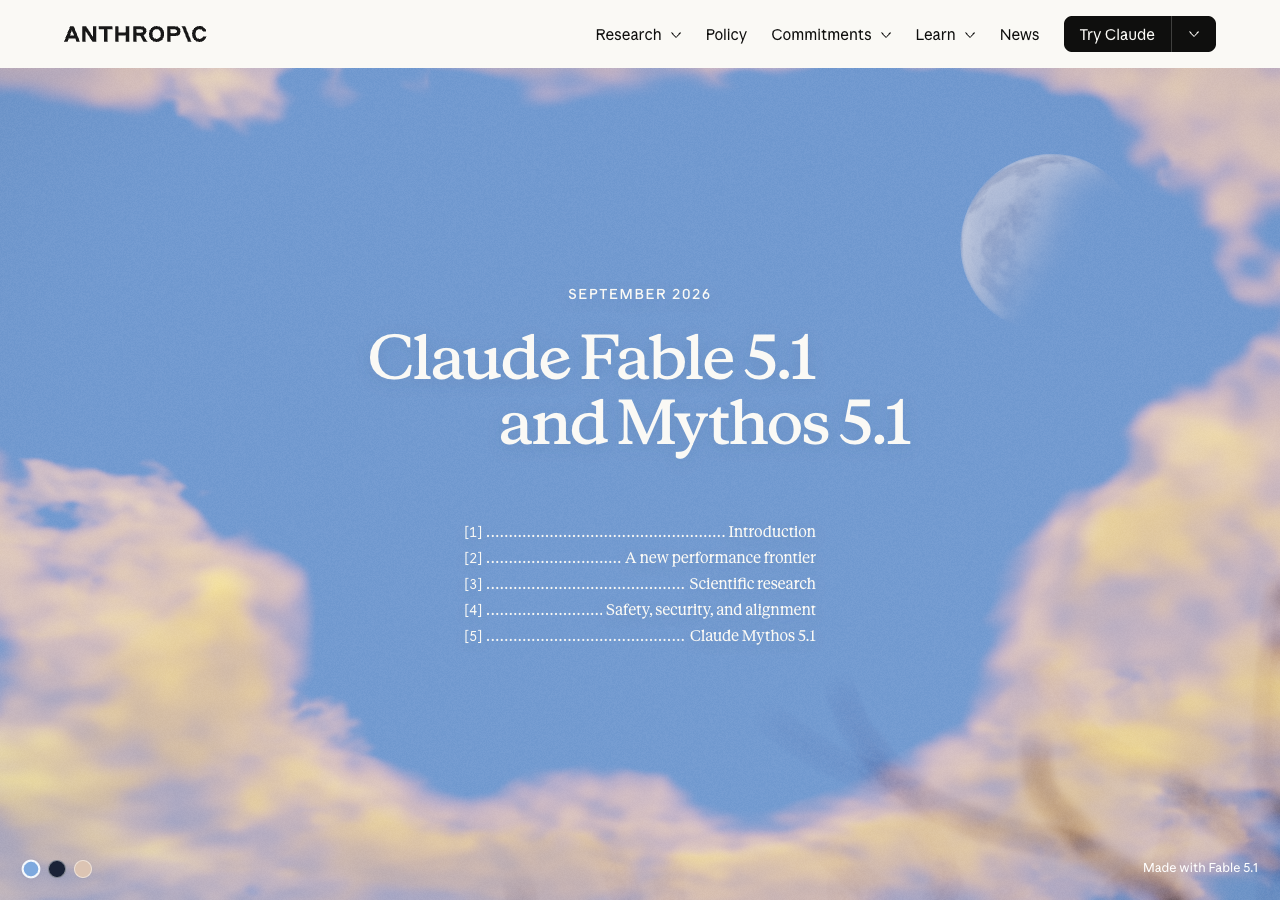
Anthropic’s release page. Fable is generally available; Mythos has restricted access. View source ↗
Fable 5.1 keeps standard API rates at $10 per million input tokens and $50 per million output tokens. Cache reads fall to $0.25 per million, a quarter of Fable 5’s rate. The savings depend on how much of your input is already cached.
The upgrade has three breaking changes: forced tool use returns an error, older models cannot read its thinking blocks, and editing earlier turns invalidates those blocks. Check these paths before swapping the model ID.
Try this. Replay a few real tool conversations, including a resumed conversation and an edited earlier turn. Compare total cost and failures against your current model.
Gemini
Gemini 3.8 Flash prices double in January
Google’s launch artwork. Flash Cyber is a separate trusted-access offering. View source ↗
Standard API prices are $0.75 per million input tokens and $3.75 per million output tokens through December 31. On January 1, 2027, they become $1.50 and $7.50. Thinking tokens count as output.
At fixed usage of 100,000 input and 20,000 output tokens, that is $0.15 now and $0.30 in January. This example excludes tools, cache storage, retries and taxes; it does not compare task quality.
The model can spend more tokens on difficult tasks. Supported effort levels are low, medium and high; minimal returns an error. Google still supports 3.7 Flash for efficiency-focused workloads.
Try this. Test low and medium effort on the same tasks. Budget using January’s rates and the tokens actually consumed.
OpenAI
Astra charges more above 272K input tokens
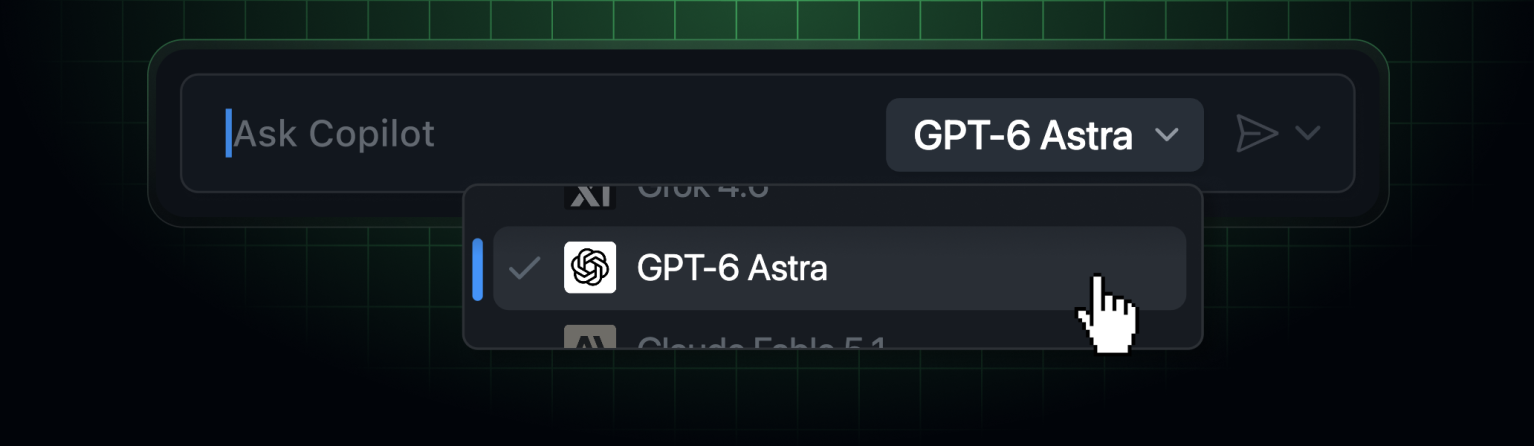
GitHub’s official Astra model-picker image. API prices below apply to OpenAI’s API. View source ↗
OpenAI’s API documentation lists a 1,050,000-token context window, but the standard price changes much earlier. Above 272,000 input tokens, the entire request uses twice the input and cache rates and 1.5 times the output rate.
With no caching, 260,000 input tokens and 20,000 output tokens cost $3.60. At 300,000 input tokens and the same output, the cost is $7.50. These are standard API calculations, excluding tools, retries and taxes.
Access also differs by product: Copilot began a gradual rollout September 4; ChatGPT Enterprise access is off by default until an administrator enables it under the organization’s agreement.
Try this. Track input size before each call. Test whether trimming repeated context keeps the task accurate and below the pricing threshold.
Coding tools
HydraFusion can use several models for one task
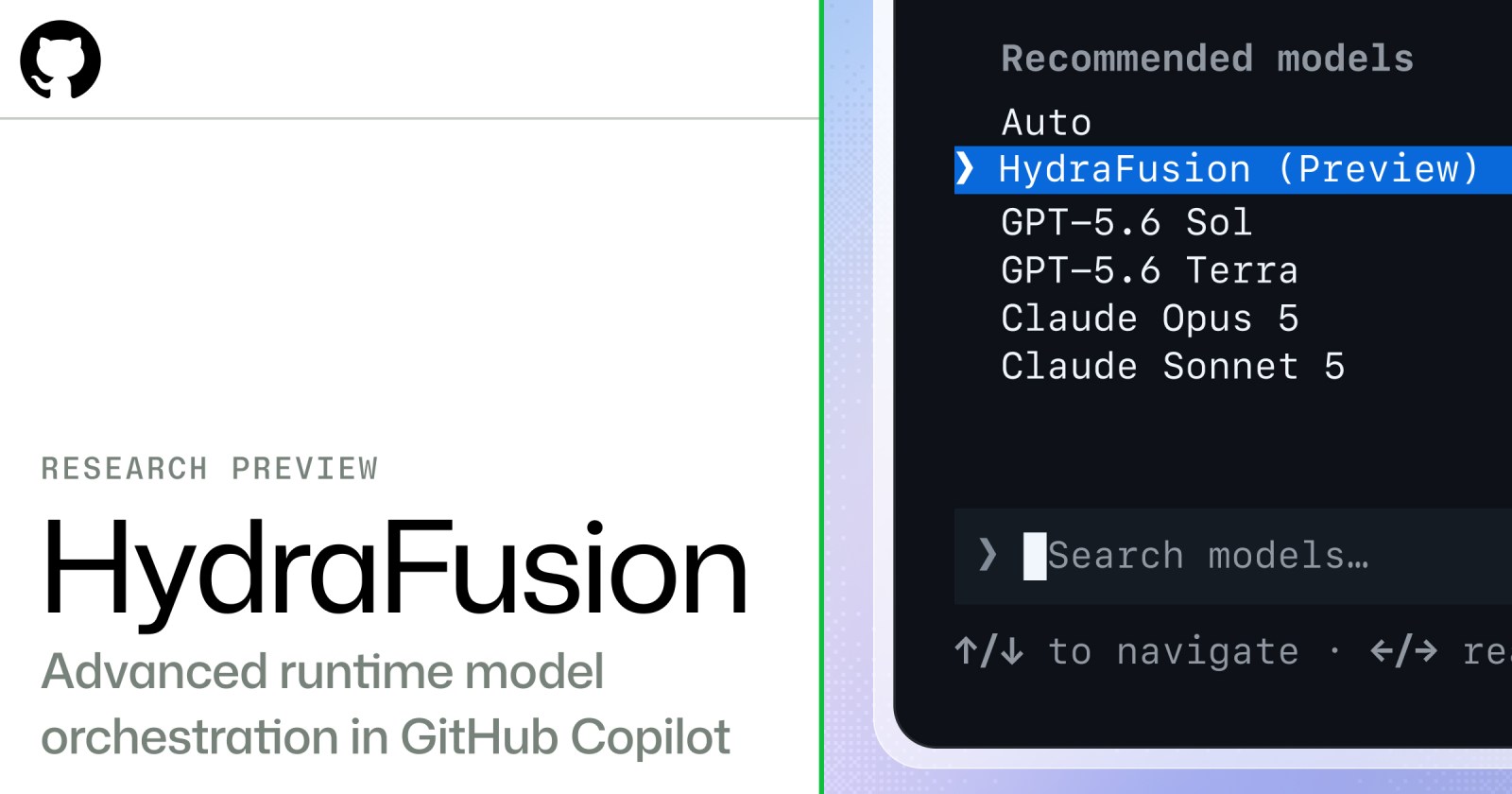
GitHub’s research-preview announcement and model selector. View source ↗
GitHub’s new Copilot CLI option can use one model, escalate to a stronger model, or ask another model to review a draft. The reviewer cannot use tools or modify the repository.
Every model’s tokens count toward the bill at its standard rate. GitHub reports lower estimated costs in offline benchmarks; those results are not a guarantee for your codebase.
Try this. Update Copilot CLI, enable experimental features, and select HydraFusion. Start with one well-scoped coding task. Compare the final patch, elapsed time and total usage.
Also this week
Other releases
Muse Spark 1.3
Meta’s September 2 release adds max reasoning through Muse Code and Meta Model API.
Qwen’s September snapshot
Qwen3.8 Max 0902 is a September 2 snapshot. Check prices for the specific provider and region.
Mistral OCR 4.1
Mistral’s changelog records general availability on August 31, following the July preview.
One comparison to run
Test one workflow before switching
- ChooseUse five recent tasks with known acceptable results.
- CompareKeep inputs, tools and completion criteria the same.
- RecordCheck accuracy, failures, elapsed time and total cost.
Switch only if the improvement matters for the work your team actually does.