Claude Code
Mods can stop a risky Claude Code command
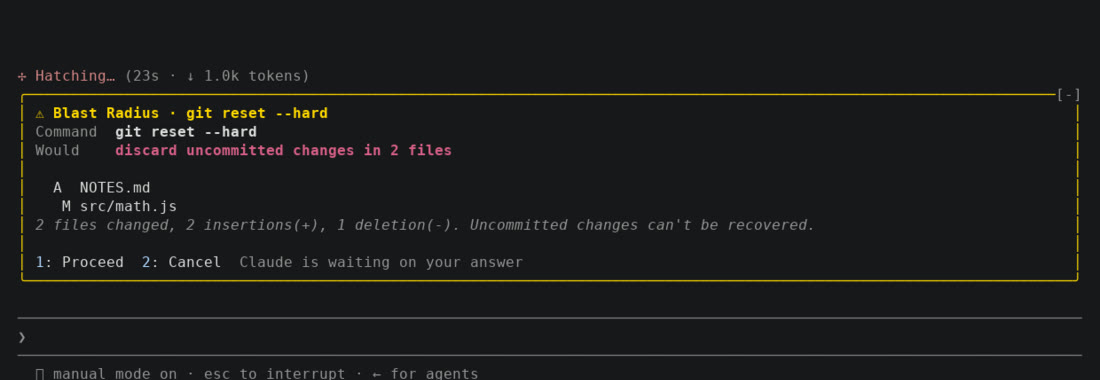
Anthropic’s Blast Radius example holds a destructive command and shows the files it would affect. View official source ↗
- What changed
Claude Code mods are JavaScript or TypeScript hooks in plugins. They can observe an event, rewrite a tool call, deny it, or add interface elements. Claude Code 2.1.287 or later supports them.
- Why it matters
A team can put a review step in front of a specific command without changing every agent prompt. But a mod runs with Claude Code’s machine access, so its source needs the same scrutiny as any installed package.
- What to do
Start with Anthropic’s Blast Radius example in a disposable repo. Trigger a harmless dry run, inspect the affected-file list, and check where its command-text filter can miss an alias or script.
Google DeepMind
Argon can output far more, but most builders cannot use it yet
| Gemini 4 Argon | Announced state |
|---|---|
| Maximum output | 1M tokens, up from 64K |
| Access now | Selected cyber defenders |
- What changed
Gemini 4 Argon raises Google’s output limit from 64K to 1M tokens, about 15.6 times as much. Google is giving selected defenders early access to test vulnerability discovery and patching before a wider release.
- Why it matters
A single run can carry much more generated code or analysis. Today the practical decision is access, not model migration: Google has not set a broad release date.
- What to do
Keep an evaluation ready for a long coding task, with tests and review checkpoints. Run it when the paid API or AI Ultra release reaches your account; do not design a production dependency around the announced limit yet.
Model economics
Haiku 5.5 changes the price of small tasks
| API price / 1M tokens | ≤100K / >100K prompt |
|---|---|
| Input | $0.10 / $0.50 |
| Output | $0.50 / $2.50 |
| Cache read | $0.01 / $0.05 |
- What changed
Claude Haiku 5.5 is available now across Anthropic’s platforms for short, high-volume tasks. Anthropic also cut Sonnet 5.5 cache reads from $0.20 to $0.10 per million tokens on October 7.
- Why it matters
The same model can cost five times more per input or output token once a Haiku prompt crosses 100K. Anthropic’s claims of roughly 75% lower Haiku task cost and 20% lower Sonnet agent cost are vendor averages, not a bill forecast.
- What to do
Replay a labeled batch of summaries or classifications. Log accepted results, prompt lengths, output tokens, cache hits, and retries before routing routine traffic to Haiku.
GitHub Copilot
Copilot can operate desktop apps in public preview
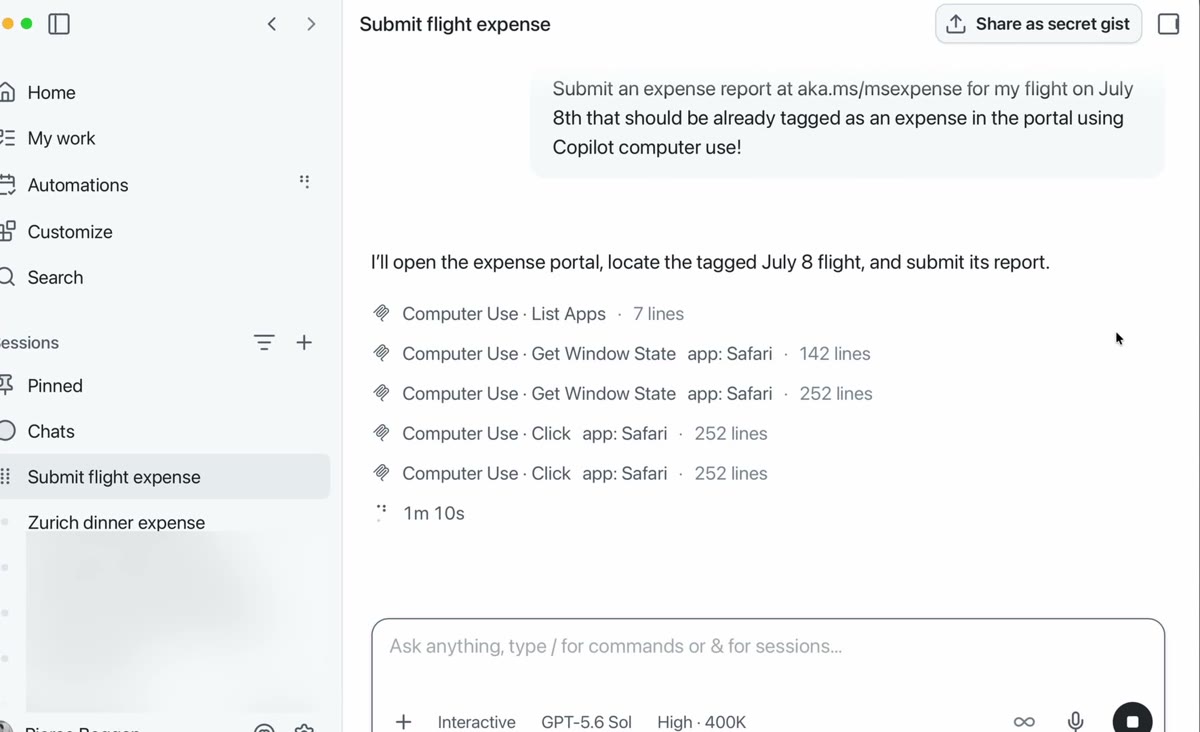
GitHub’s demo shows the app’s computer-use actions during an expense-report task in Safari. View official source ↗
- What changed
GitHub Copilot computer use lets the CLI and desktop app read app windows, click controls, and enter text across macOS and Windows apps. It can reach software with no API.
- Why it matters
The demo shows a real interface task, but this is a public preview. Tool permissions govern app control; saved approvals can remove later prompts. An organization can disable it.
- What to do
Try a disposable workflow with test data. Name the apps and the outcome, watch each action, and check the approval list before allowing an app again.
OpenAI models
GPT-6.1 Sol may lower the cost of harder agent tasks
| API / 1M tokens | GPT-6.1 Sol | Astra |
|---|---|---|
| Input | $2 | $10 |
| Output | $10 | $50 |
| Cached input | $0.10 | $1 |
- What changed
GPT-6.1 Sol updates the Sol model covered in Signal 007. OpenAI reports better coding, computer use, and document work; its standard input and output rates are one-fifth of Astra’s.
- Why it matters
A model that finishes more tasks at the same rate can be cheaper overall. OpenAI’s benchmark gains still need checking on your own work.
- What to do
Run the same small set of reviewed tasks on GPT-6 Sol, 6.1 Sol, and Astra. Compare accepted results and total tokens. It is in ChatGPT Work, Codex, and the API, not Chat.
Also since the last issue
Useful updates
28 days of shipping · ongoing
OpenAI’s Developer Community tracker began October 4 and changes daily. Check the current day and your account limits before relying on a reset or speed claim.
Copilot local sandbox · general availability
GitHub’s October 7 release lets teams restrict the files, network, and credentials that agent-run tools can reach. Check the effective policy before running a real task.
Copilot workflows · preview
GitHub’s October 1 release adds coded, repeatable agent workflows. Start with one release check that has a human review checkpoint.
One workflow to try
Test the cost per accepted task
Use ten already-labeled support tickets. Run the same classification prompt on your current model and Haiku 5.5. Save the accepted labels, mistakes, token usage, and total API cost. A cheaper token rate only matters if the completed task stays reliable.
Term of the week
Cache read
A cache read reuses prompt text the provider has stored from an earlier request. It usually costs less than fresh input, but only when the request actually hits the cache. Compare bills using observed cache hits, not the advertised cache rate alone.